Ask a question worth the money.
Programs do not need prettier descriptions. They need a technical hypothesis whose answer would matter.
About
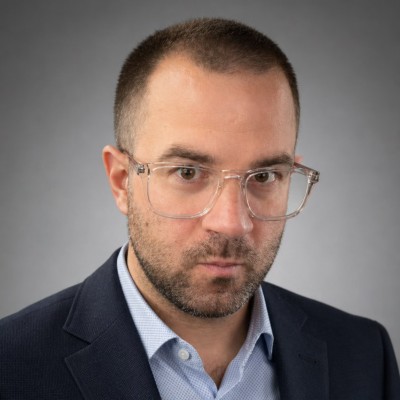
I am an engineer. I like hard technical problems, but I am even more interested in what happens after the technical problem is solved.
My career started in aerospace and flight test. That environment is clarifying: the system performs, or it does not. At the U.S. Air Force Test Pilot School, I learned how to evaluate complex cyber-physical systems when the evidence is incomplete and the stakes are real.
At MIT, I studied how to design novel aerospace systems before anyone knows exactly what they should become. At Wharton, I added markets, organizations, incentives, and capital to that picture. Those are not separate subjects. They are parts of the same system.
Today, I design high-risk research programs at DARPA and advise early-stage companies through Wave Function Ventures. Different jobs, same question: what has to be true for a promising technology to become a real capability?
How I approach the work
Programs do not need prettier descriptions. They need a technical hypothesis whose answer would matter.
Decide what result would count, what would kill the idea, and who must believe the evidence before the work begins.
If nobody has the authority, incentive, money, or trust to use it, the technology is not done.
Building programs to answer technical questions that are too risky or too early for conventional R&D.
Helping deep-tech founders think past the breakthrough and toward the system required to scale.
A PhD focused on designing complex aerospace systems when the concept itself is still uncertain.
Learning how to test advanced systems against evidence instead of enthusiasm.
Continue